Science
Find out more about Science Department
Science
Science begins with curiosity: Why does this happen? What if we changed this? How can we make it work better?
At Hai Sing, students do more than learn scientific facts and formulae. They question, investigate, experiment and create, using Science to make sense of the phenomena they encounter in the world around them. Through hands-on investigations, discussions and collaborative problem-solving, students learn to think and work like young scientists. They ask questions, test ideas and use evidence to arrive at conclusions.
Science You Can See, Touch and Test
Sometimes, the best way to understand a scientific idea is to experience it for yourself.
Students might find themselves standing on a tray of eggs to investigate pressure, discovering first-hand how the arched structure of an eggshell can distribute their weight without breaking. In Chemistry, physical molecular models that students can hold and manipulate transform invisible atoms and chemical bonds into structures they can see, explore and understand.
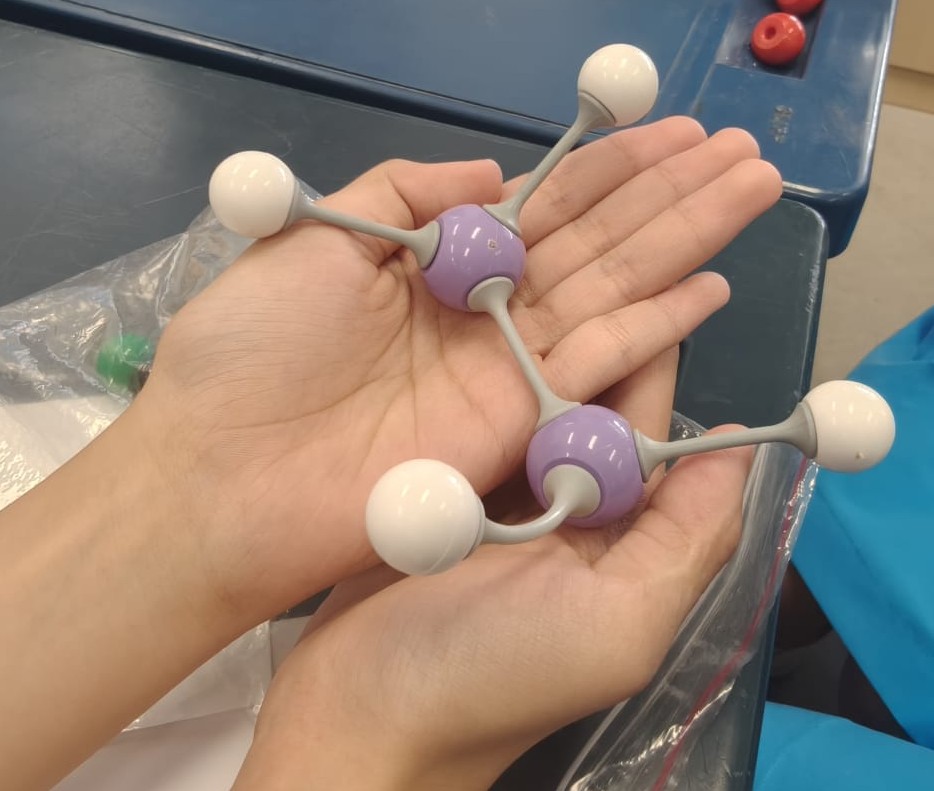
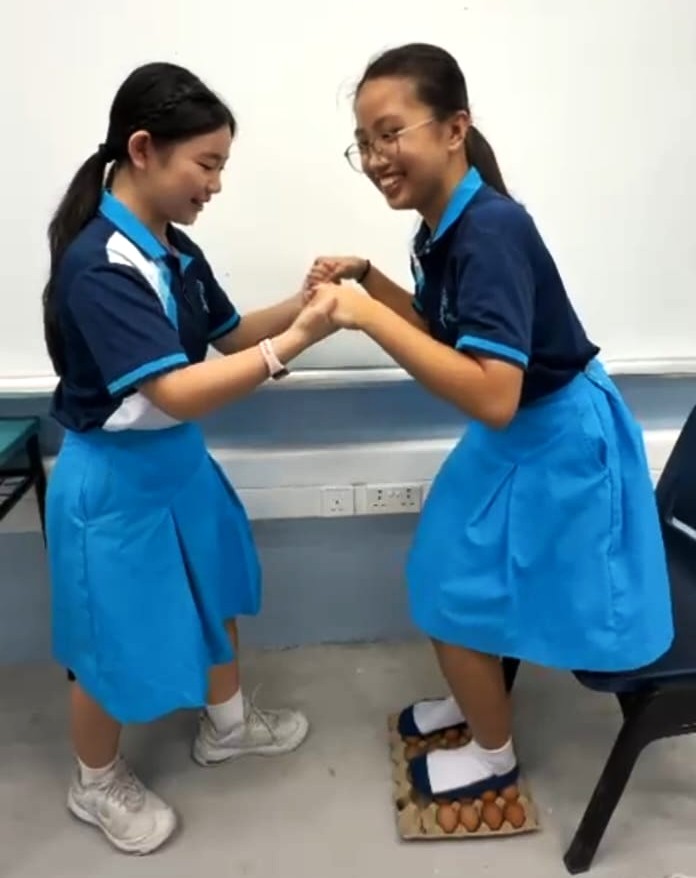
Such experiences make abstract scientific concepts tangible. Instead of simply being told how something works, students have opportunities to observe phenomena, make predictions, test their understanding and explain what they discover.
From Scientific Ideas to Something You Can Make
Science also comes alive when students use what they know to create.
Students apply scientific principles through hands-on projects such as constructing a simple DC motor or designing a sustainable water wheel from recycled materials. Building the first version is only the beginning: students test their creations, consider what affects their performance and refine their designs to improve efficiency.
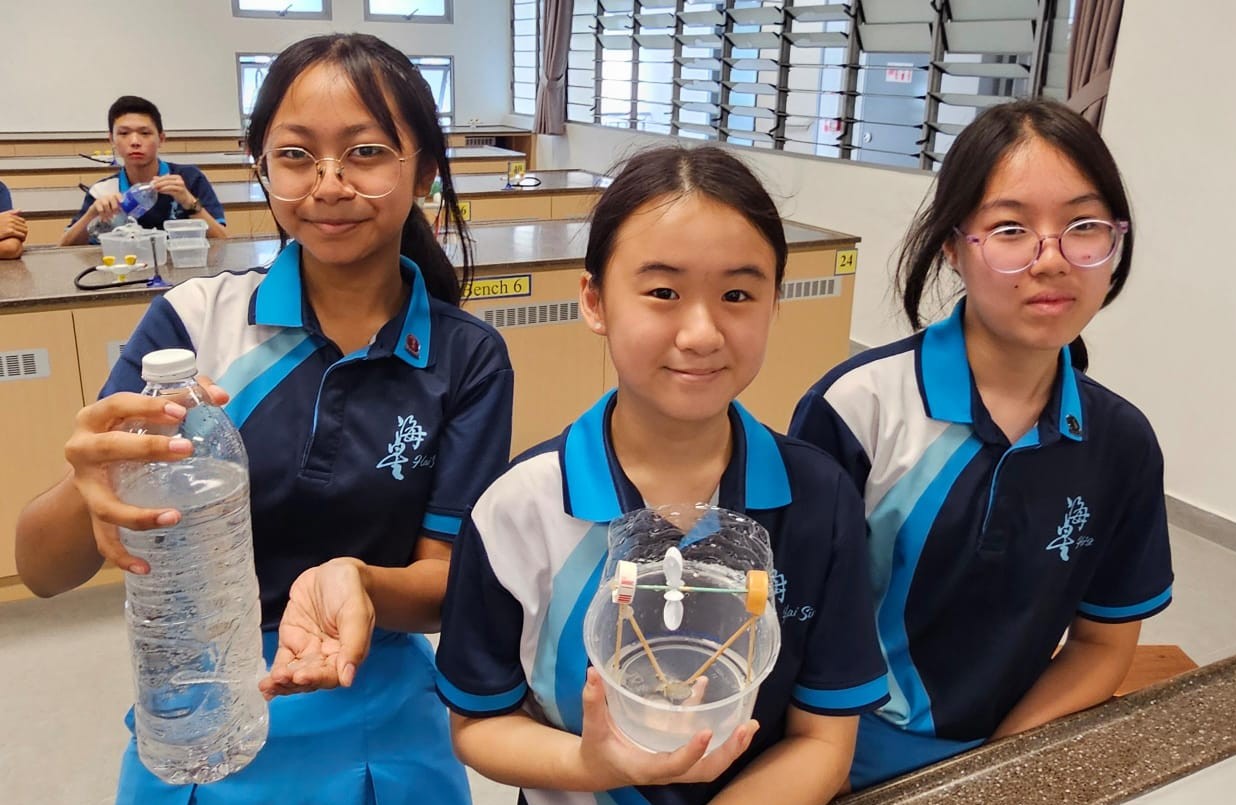
Workshops add another dimension to this experience. Through activities such as ice-cream making, students encounter the Science hidden within familiar everyday experiences, discovering that scientific principles are at work in places they may never have noticed before.
In this way, students learn that Science is knowledge that can be tested, applied and used to make things happen.
Science Beyond the Laboratory
Learning extends beyond the school laboratory as students encounter Science operating in authentic settings.
Through learning journeys such as visits to the Science Centre, students see how scientific knowledge and processes are applied beyond school and make connections between what they learn in class and the products, industries and technologies they encounter in everyday life.
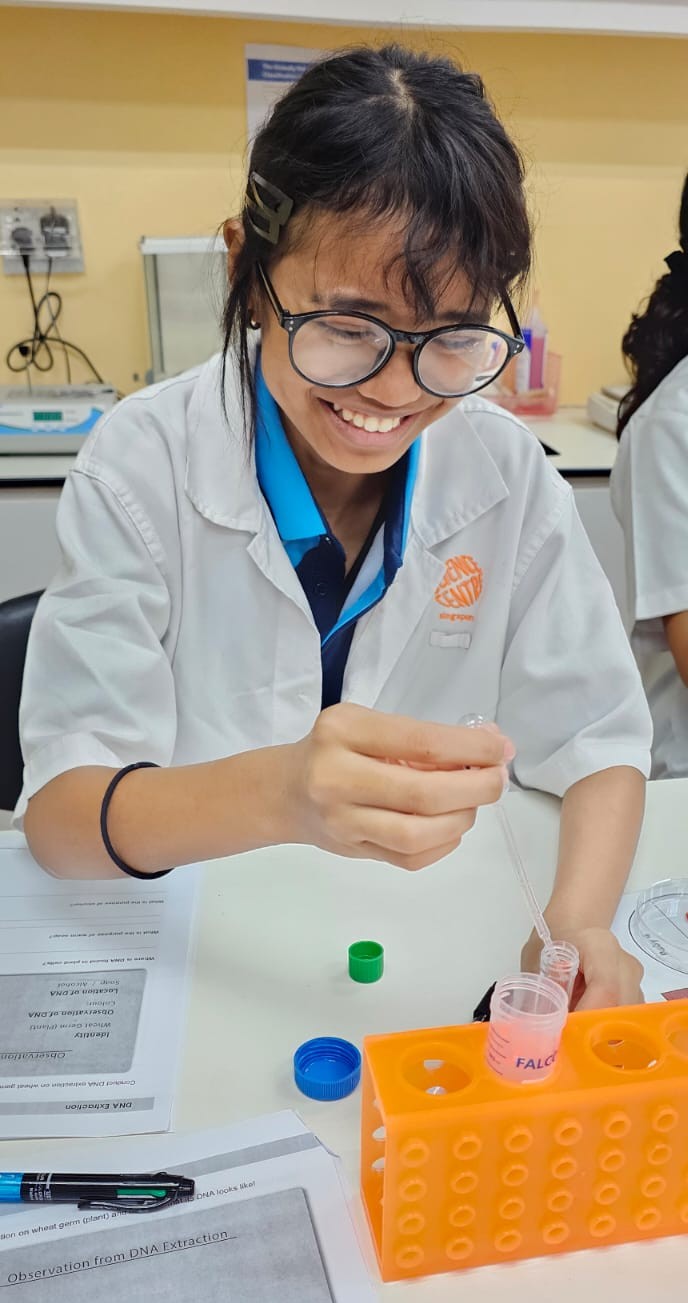
Sustainability projects also invite students to consider how Science can help us respond to challenges facing our communities and environment. These experiences encourage students to look at the world around them with a more questioning eye and recognise the relevance of Science to the choices we make.
For Those Who Want to Go Further
Students with a strong interest and aptitude in Science have opportunities to challenge themselves beyond the regular curriculum through external competitions and enrichment platforms.
These include the C.B. Paul Science Quiz, Singapore Junior Biology Competition and competitions organised by the Genetic Modification Advisory Committee (GMAC).
Such experiences expose students to unfamiliar and more demanding scientific problems, requiring them to draw connections across what they know, apply their understanding in new situations and think beyond routine classroom questions. They also allow students to discover particular areas of Science that may inspire deeper study in the future.
Curious Today, Ready for Tomorrow
The habits developed through Science extend far beyond the laboratory. Students learn to ask good questions, examine evidence, test assumptions, solve problems systematically and change their thinking when the evidence points them in a different direction.
These are important foundations for further studies in Science, Engineering, Technology, Healthcare and other STEM-related fields, but they are equally valuable in navigating everyday life in a world increasingly shaped by science and technology.
Above all, we hope our students leave the Science classroom with the confidence to look at something they do not understand and ask:
“Why does that happen and how can I find out?”