
Mathematics
Find out more about Mathematics Department
Mathematics
Mathematics is more than arriving at the right answer. At Hai Sing, we want students to be curious about how a solution works, why it works and whether there might be another way to get there.
In our Mathematics classrooms, students are encouraged to explore ideas, look for patterns and make their thinking visible. Through investigative tasks and collaborative discussions, they learn to explain their reasoning, compare different approaches and justify their solutions. In doing so, students develop not only a stronger understanding of mathematical concepts, but also the confidence to persevere when the answer is not immediately obvious.
Seeing Mathematics All Around Us
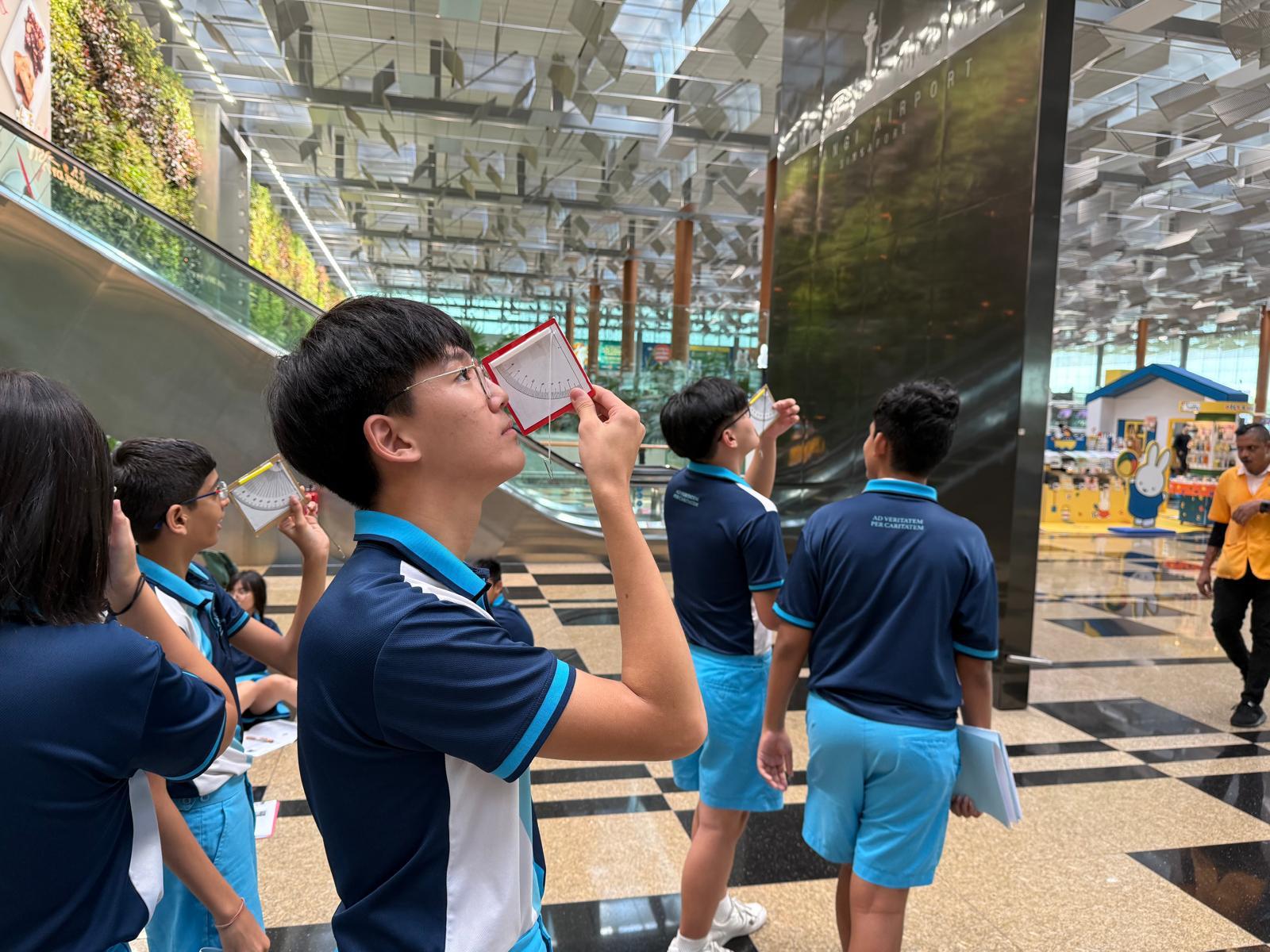
For our Lower Secondary students, the Mathematics Trail takes learning out of the classroom and into the world around them. Working in teams, students encounter authentic challenges that require them to estimate, measure, collect data and apply mathematical concepts to real-life situations. Instead of being presented with all the information they need in a textbook question, students have to decide what information is useful, determine how to approach a problem and discuss whether their solution makes sense. Along the way, they explain and justify their thinking to their peers, discovering that Mathematics can be found in everyday spaces and experiences.
“The Mathematics Trail helped me realize that Mathematics is all around us, not just in the classroom.”— As one student reflected:
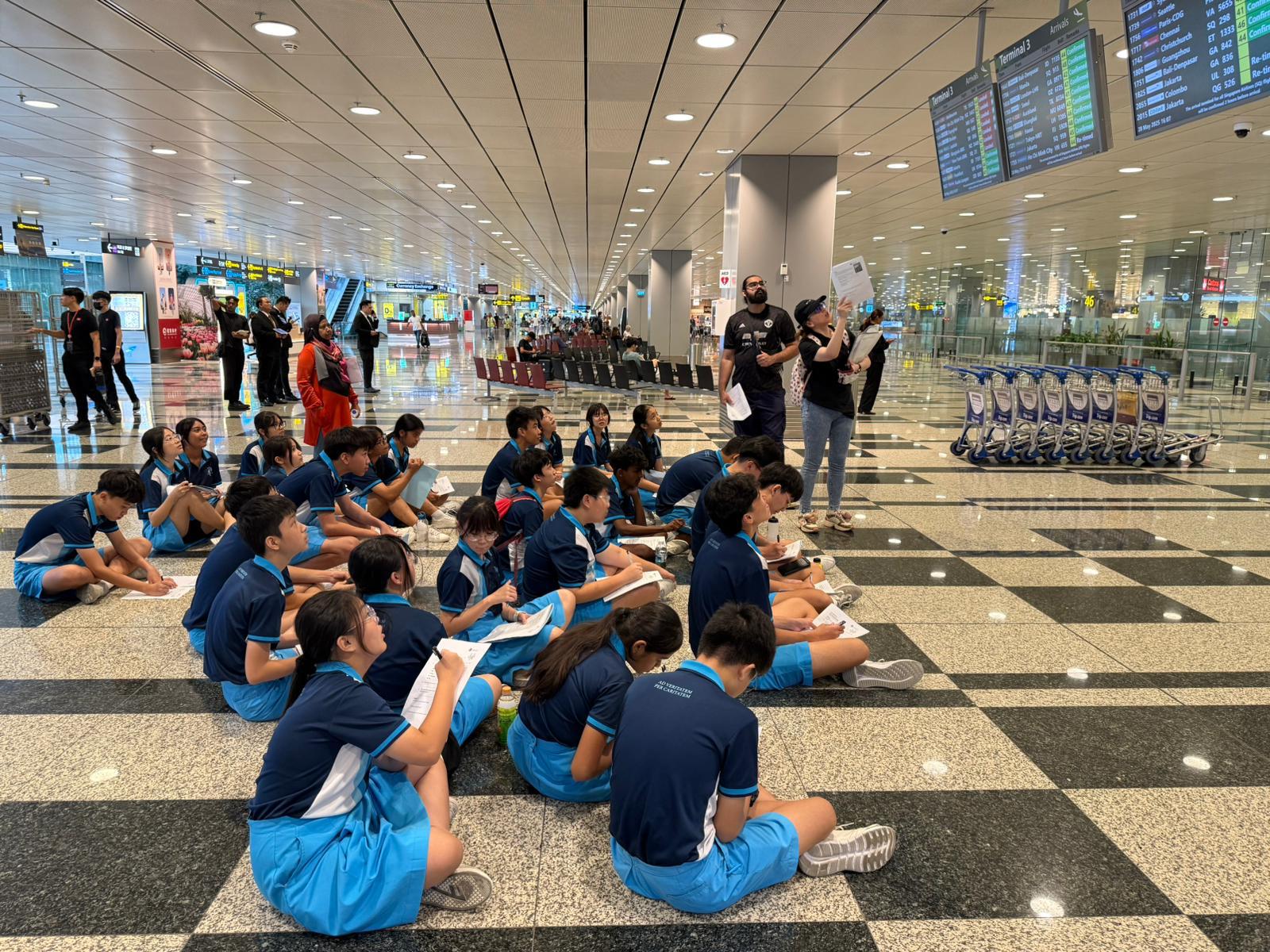
“The training challenged me to think differently and taught me that there is often more than one way to solve a problem.”— The experience develops persistence as much as mathematical ability. As one student puts it:
Learning to Think Mathematically
Whether students are solving a problem with their classmates, applying Mathematics during a trail or wrestling with an Olympiad challenge, we want them to become comfortable with thinking through uncertainty. They learn to break complex problems into manageable parts, recognise patterns, evaluate possible approaches and communicate their reasoning clearly. When a solution does not work, they learn to reconsider their assumptions and try again.
These habits extend well beyond the Mathematics classroom. They prepare students for further studies in Mathematics, Science, Computing and other quantitative fields, while equipping them to interpret information and make sound, evidence-based decisions in everyday life.
Above all, we want students to leave our classrooms seeing Mathematics not simply as a subject of numbers and formulas, but as a powerful way of thinking, reasoning and making sense of the world around them.